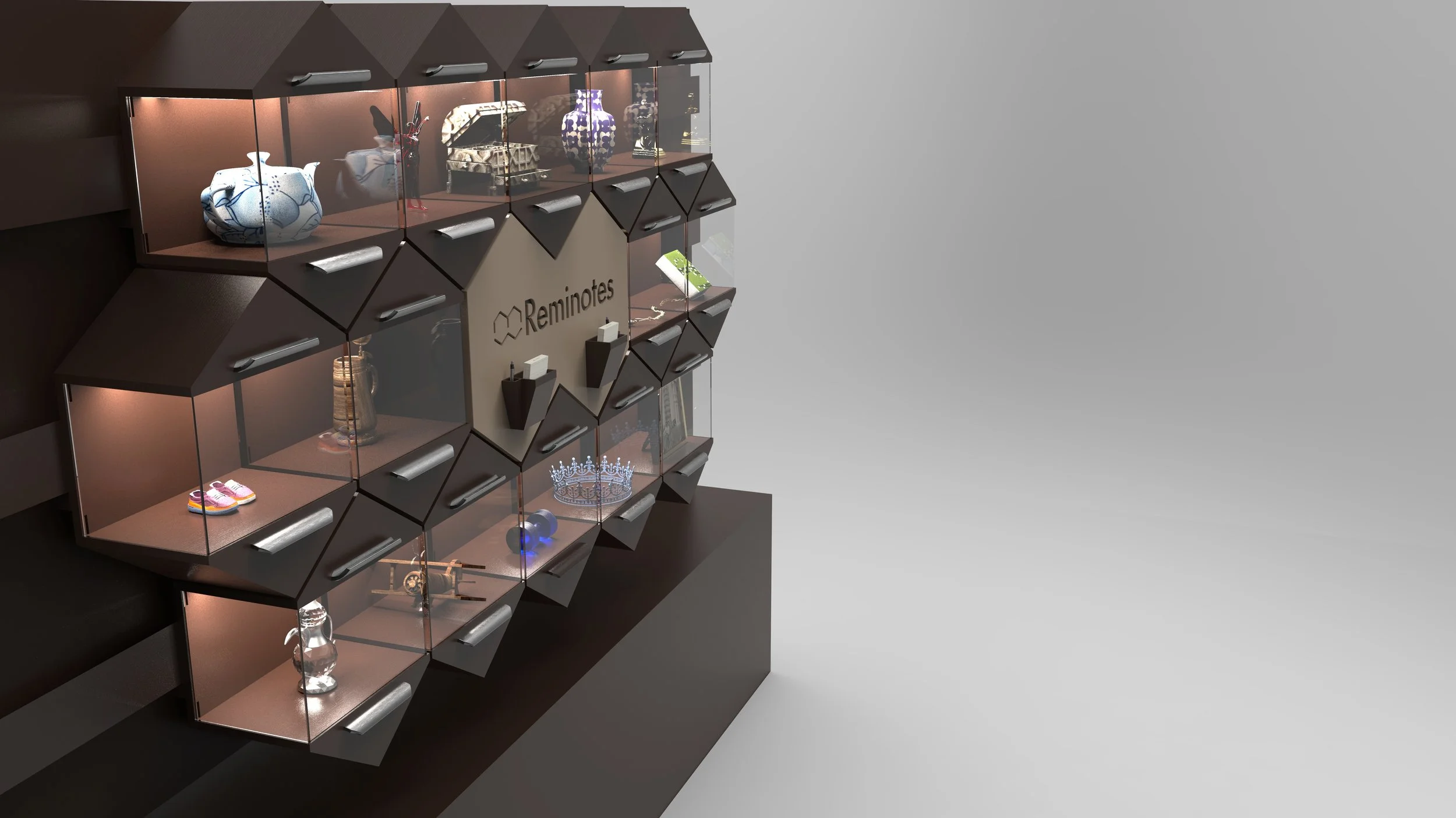
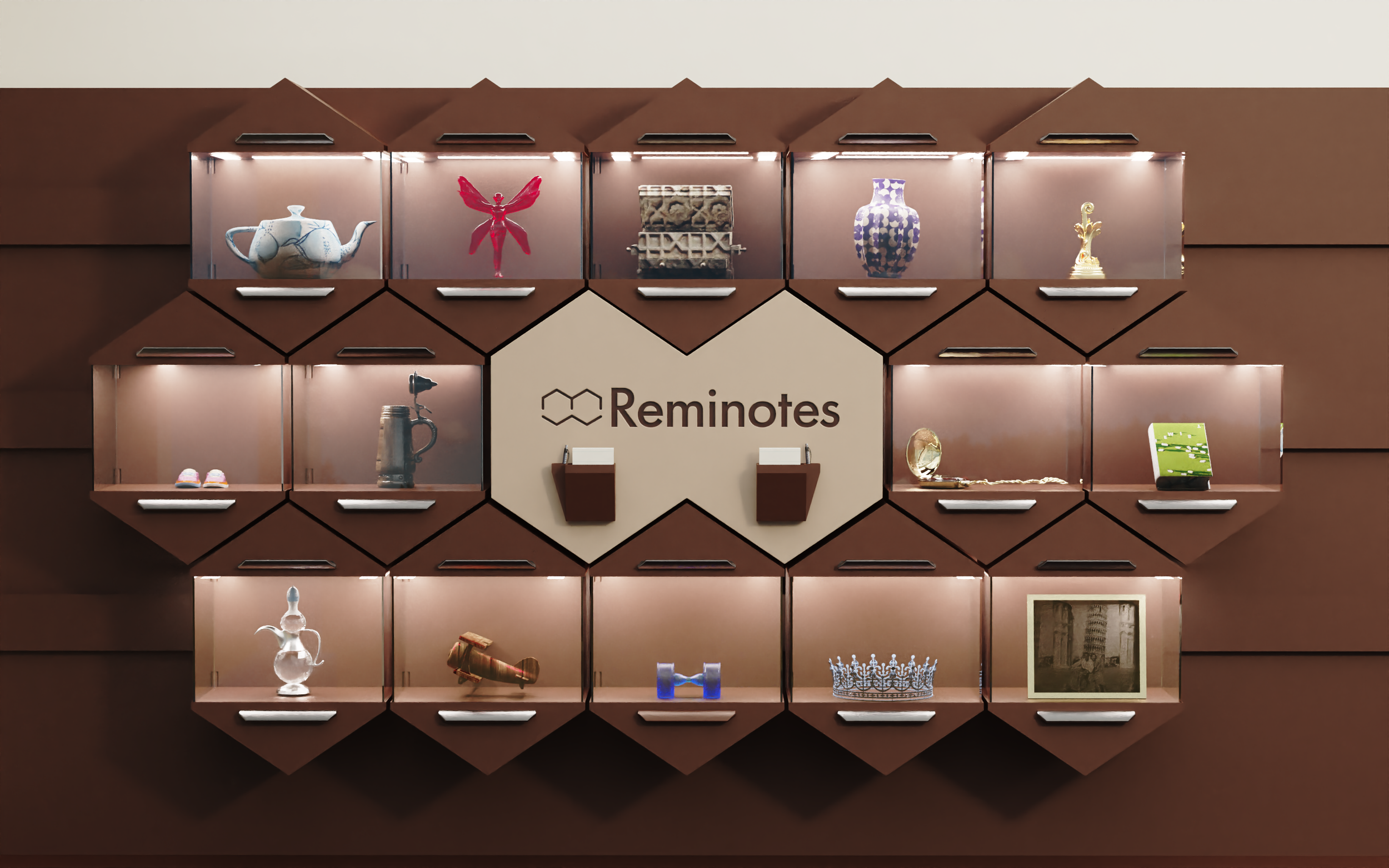
Reminotes
Reminisce through what we cherish.
Connect through what we share.
Group Project
Members: Andrius Kempinas, Owen Walker, Alivia Jiang, Sawyer Cummings
Fall 2025
SFCS Senior Living Studio
Project Overview
This project focused on designing for aging-in-place, addressing how physical, sensory, and cognitive changes can make everyday tasks more difficult as people age. Working in teams, we conducted design research with older adults and stakeholders to better understand challenges related to mobility, memory, safety, independence, and social connection. In collaboration with SFCS Architects and the Warm Hearth Village community, we identified opportunities for improvement within existing environments, products, and services. Through research, ideation, prototyping, user testing, and mentorship, we developed human-centered design solutions that create, connect, and inspire, while improving quality of life and helping older adults remain comfortably connected to their homes and communities.
Challenges Among Older Adults
Social Isolation
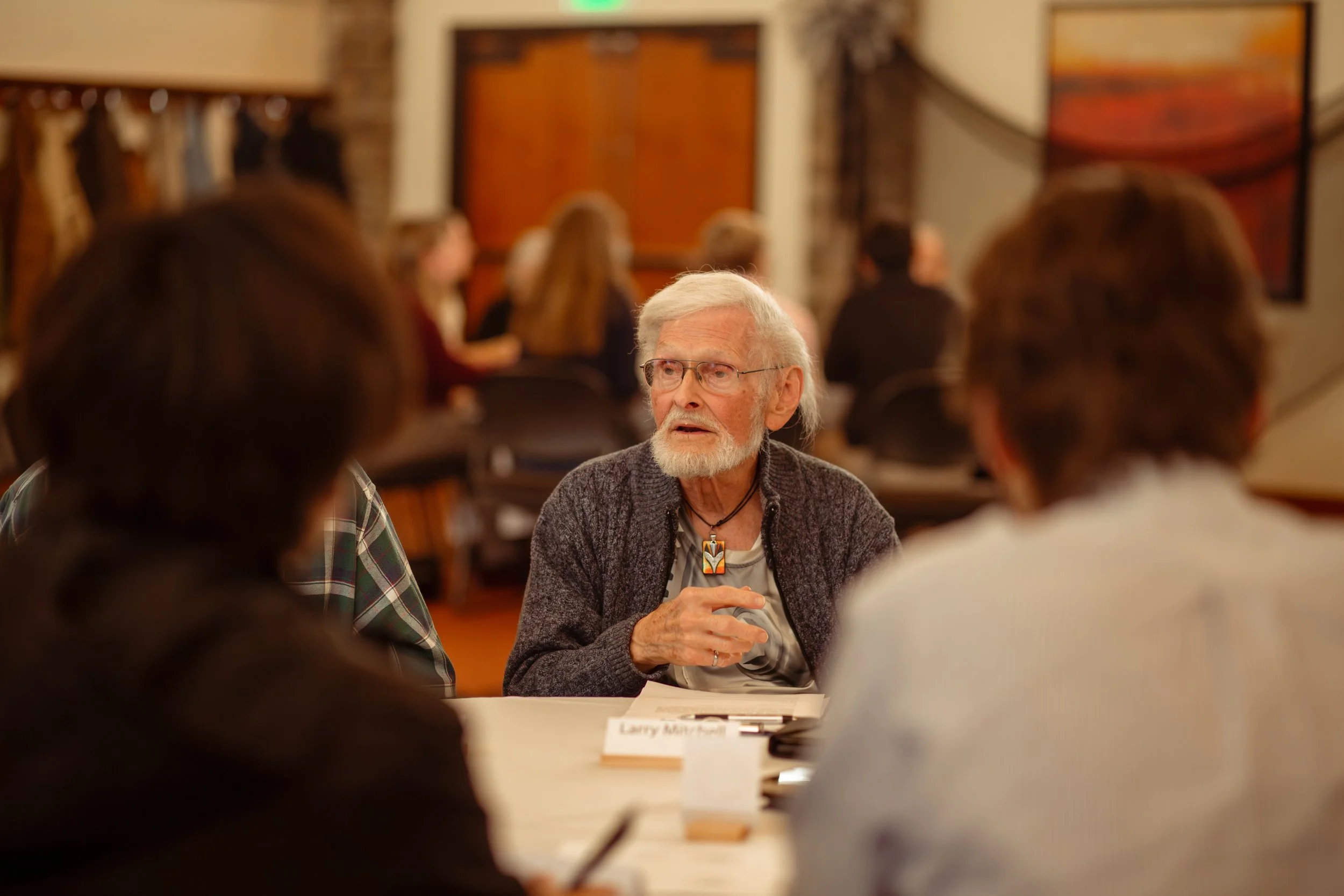
Older adults, struggle with social isolation, resulting from the loss of loved ones, limited mobility, generational divisions, leaving the workplace, etc. As such, we need to design a product which will improve social connection for older adults.
Self-Expression
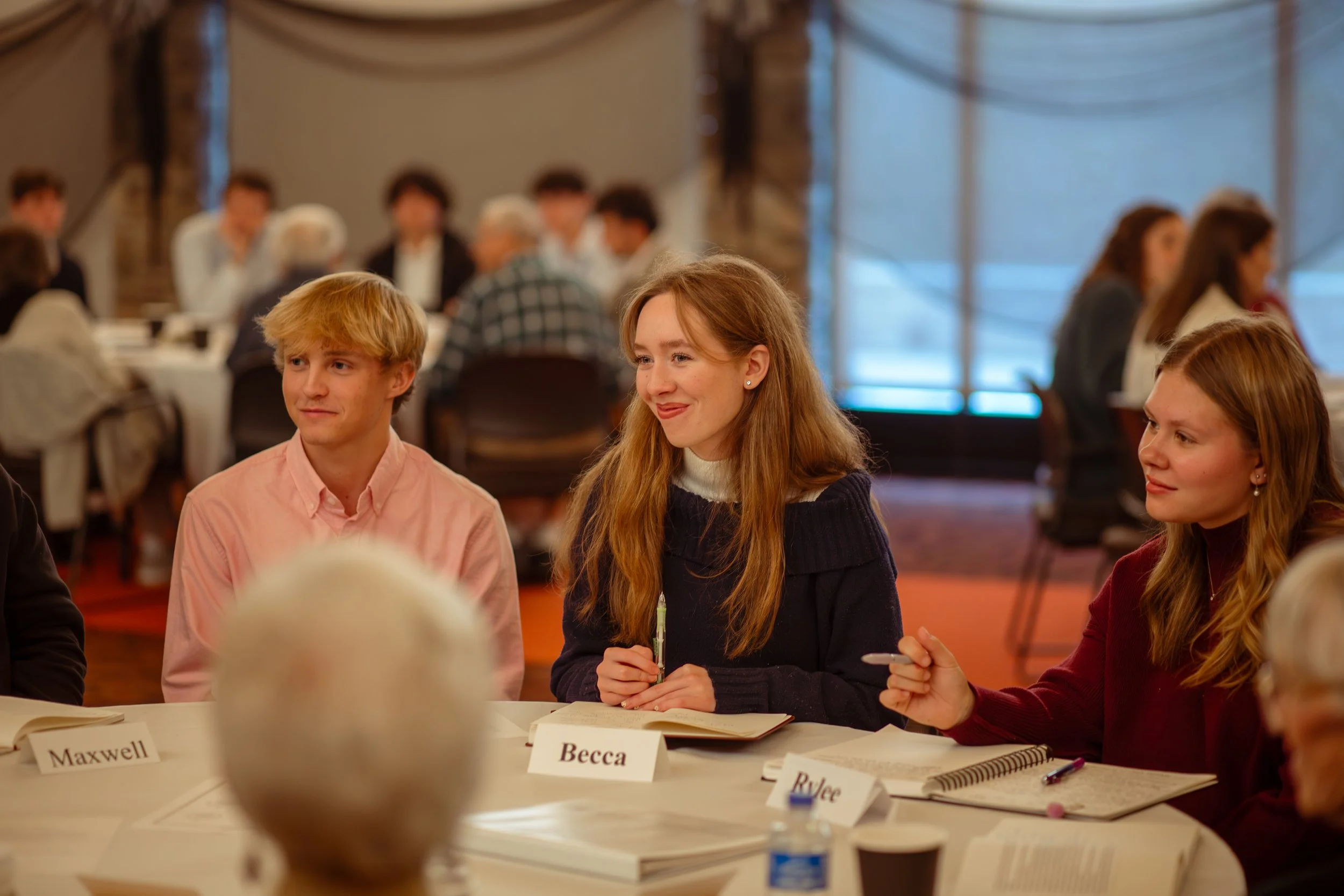
Older Adults struggle with self expression because group activities tend to cater to the “average resident”, which results in repetitive, routine programs that limit personalization and spontaneity. They need a product or service that encourages self-driven creation.
Based on these challenges that we discovered through literature review, we then drafted interview questions based on these criteria.
Interview Questions:
Self-Expression
1) How do you like to express yourself? Why?
2) How has your identity evolved as you've aged. How have your hobbies played a role in that change?
3) What activities make you feel like yourself and provide you purpose?
4) Are there any hobbies from your 20-30s that you still participate in? How has aging affected your relationship with these hobbies?
5) How do group activities give you opportunities to express yourself? How do they limit?
Social Isolation
1) How do you like to express yourself? Why?
2) How has your identity evolved as you've aged. How have your hobbies played a role in that change?
3) What activities make you feel like yourself and provide you purpose?
4) Are there any hobbies from your 20-30s that you still participate in? How has aging affected your relationship with these hobbies?
5) How do group activities give you opportunities to express yourself? How do they limit?
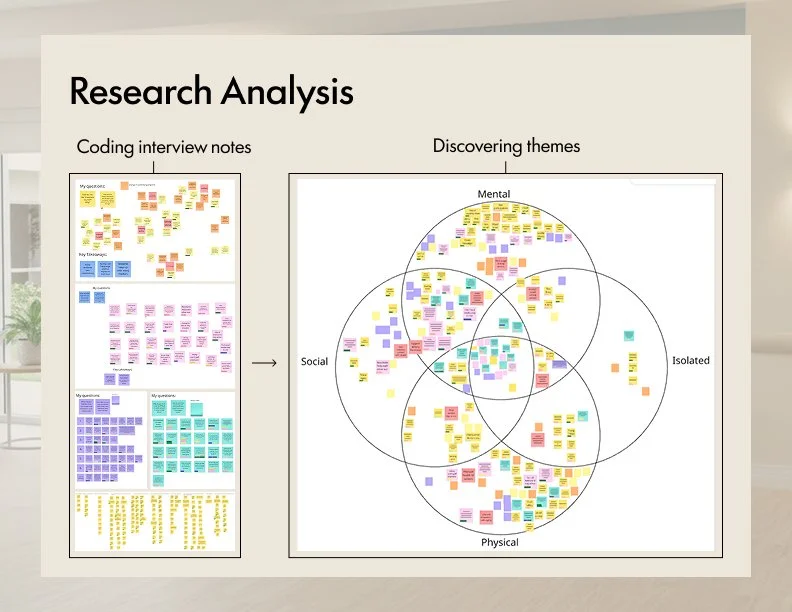
Resident Interview Findings
Residents experience angst when having to choose what items to bring with them
Residents seek to connect and learn about new residents.
Residents have a greater experience with events when they play a key role in planning/designing
Creative hobbies serve a crucial role in resident's mental well-being
Residents Value Reminiscence
Seniors have strong sentimental attachments to artifacts related to their memories, which can cause angst and loss of sense of self when they are forced to be separated with these items when moving into Warm Hearth.
“Seniors have strong sentimental attachments to their belongings. Being forced to leave items behind during move-in can cause a lot of angst.”
— WHV Staff
Residents Need Connection
It’s essential for seniors to connect with others to join the new Warm Hearth community and the residents actively seek connections with each other, so that they don’t feel isolated in their new stage of life.
“Residents often ask about newcomers so they can help them feel welcome.”
— WHV Staff
Secondary Research Findings
In a study, seniors interacted with cherished possessions to connect with their past selves, but also to cope with times of challenge and change in the present, and in some cases, to cultivate a sense of being able to maintain aging in place…
“Cherished possessions” act as powerful anchors of memory, identity, and personal history for older adults.
They bring emotional grounding and comfort, and helps older adults maintain stability and resilience.
Researchers found that older adults often use objects as narrative tools — ways to share memories, spark conversation, and pass down experiences.
They allow for older adults to feel “at home” even when their surroundings change
Core Inquiry:
*
Core Inquiry: *
How might we transform senior’s sentimental attachments into opportunities for self expression and connection?
Ideation
Initial Prototyping
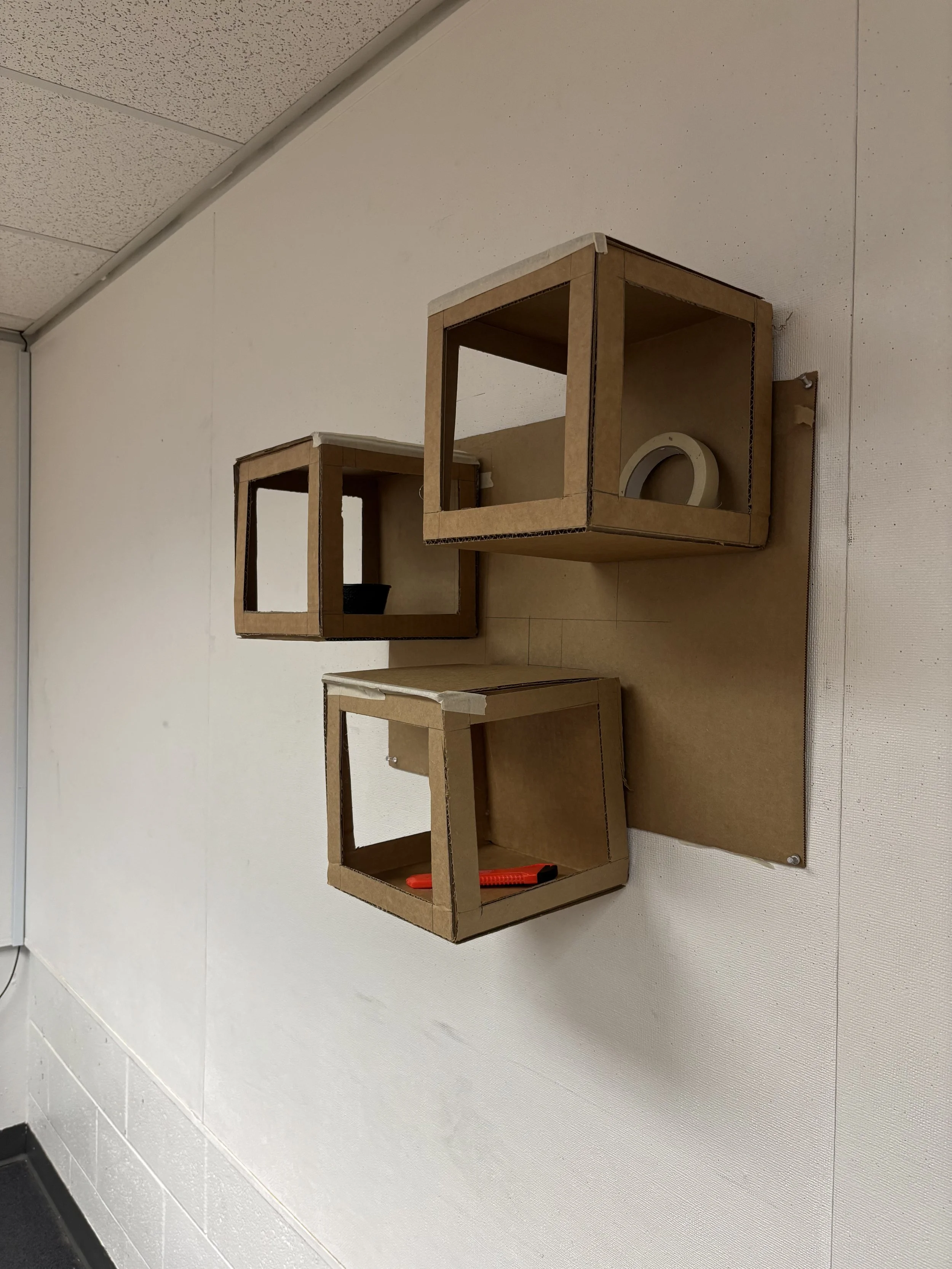
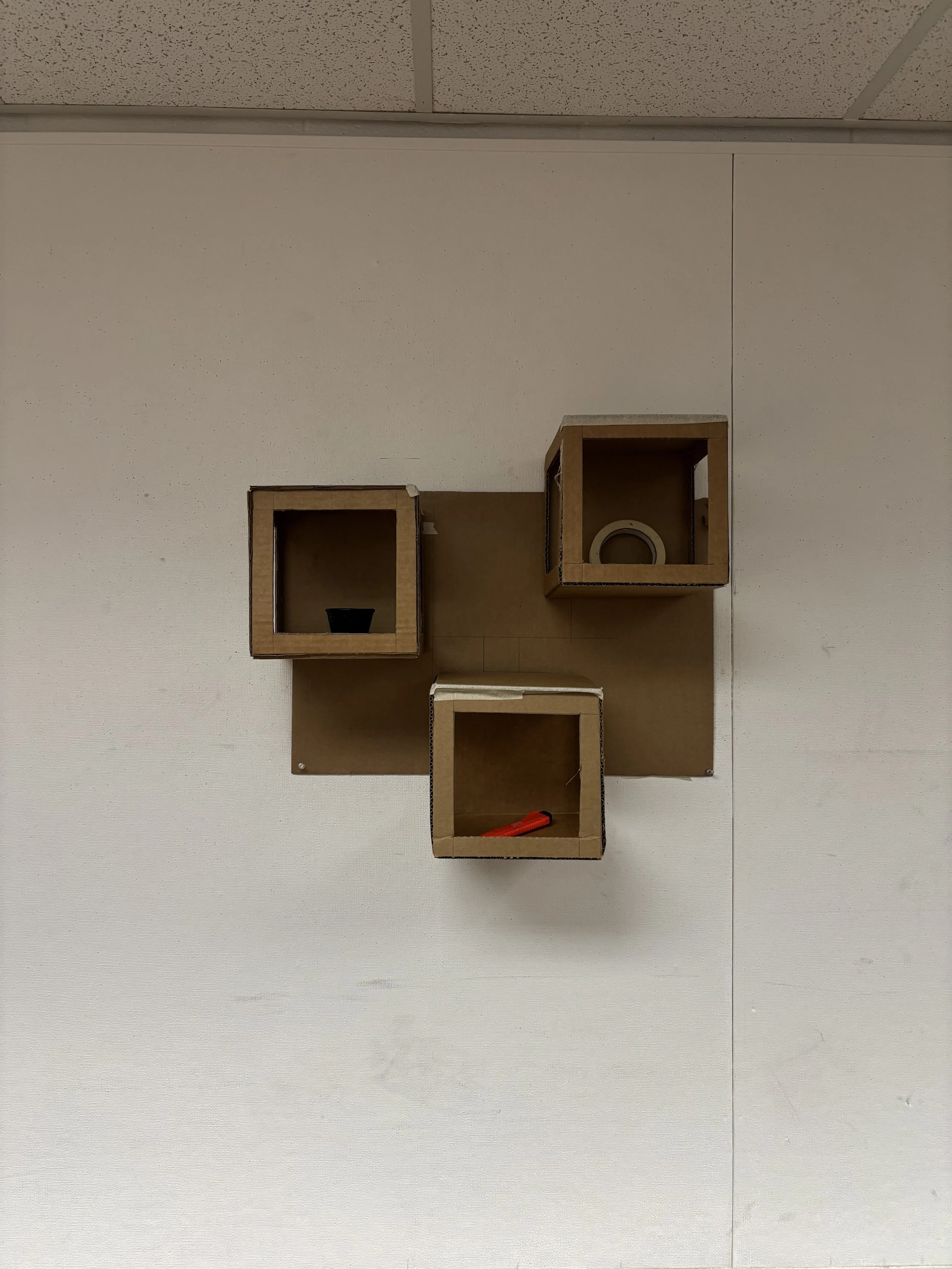
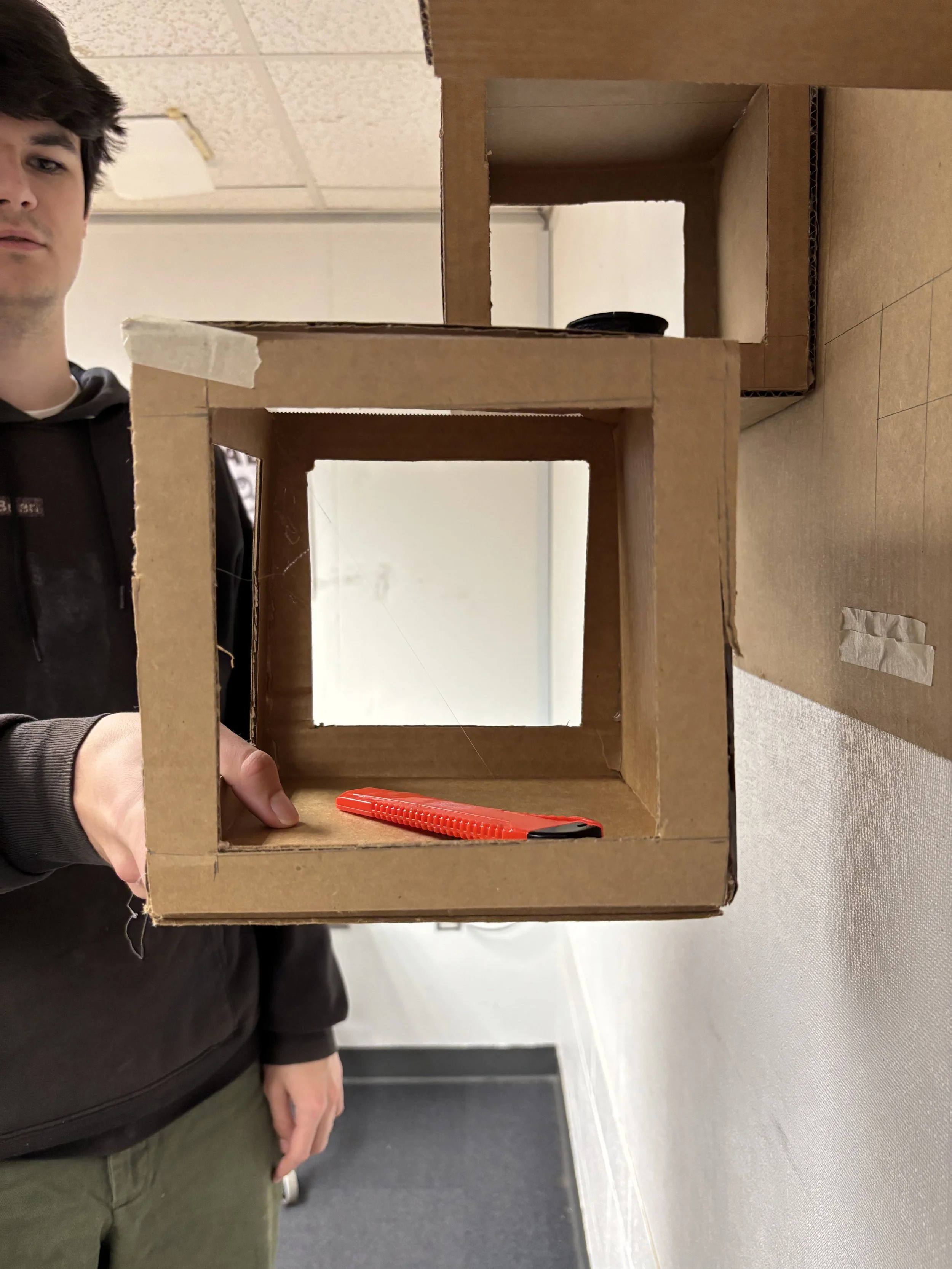
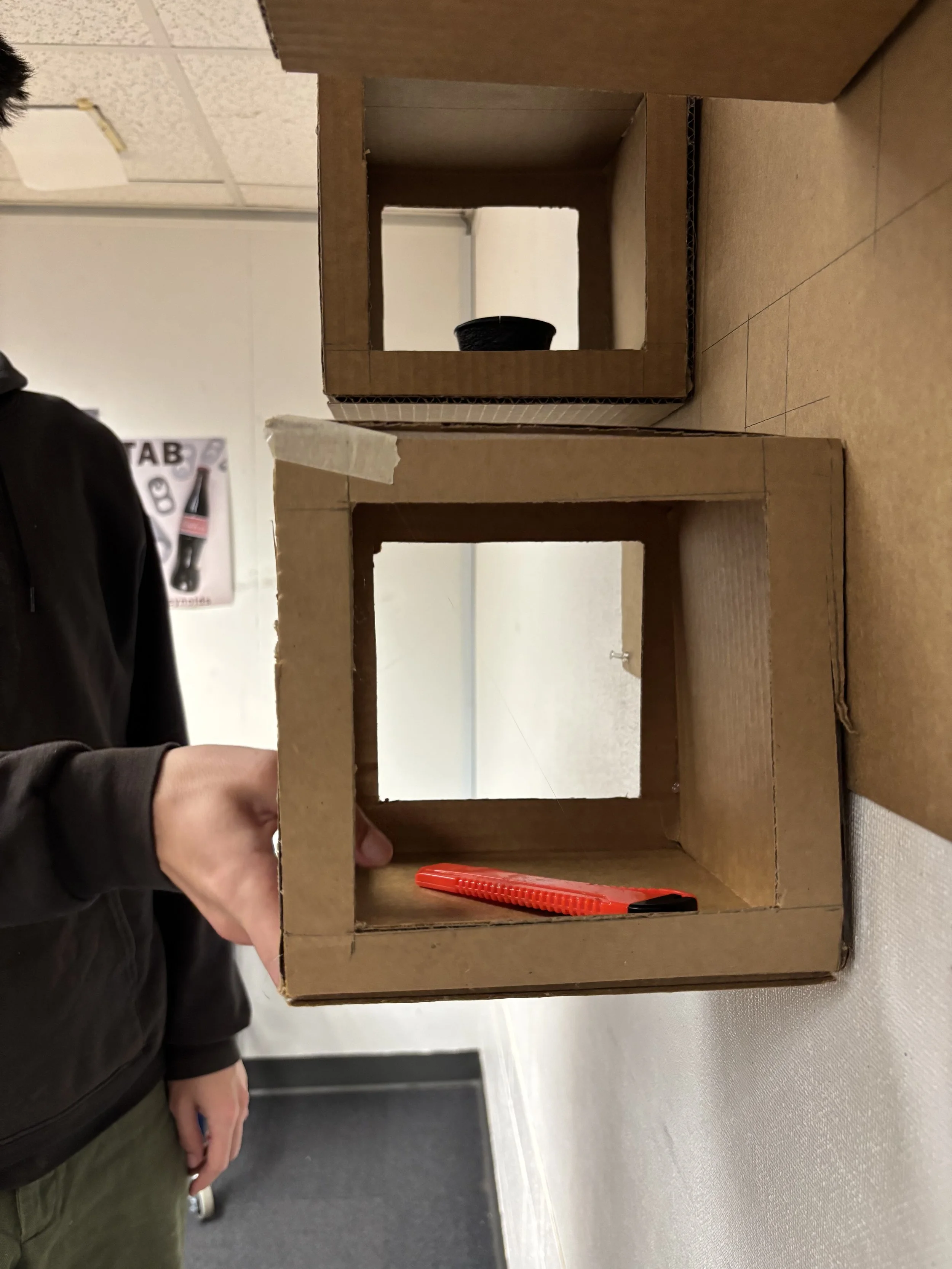
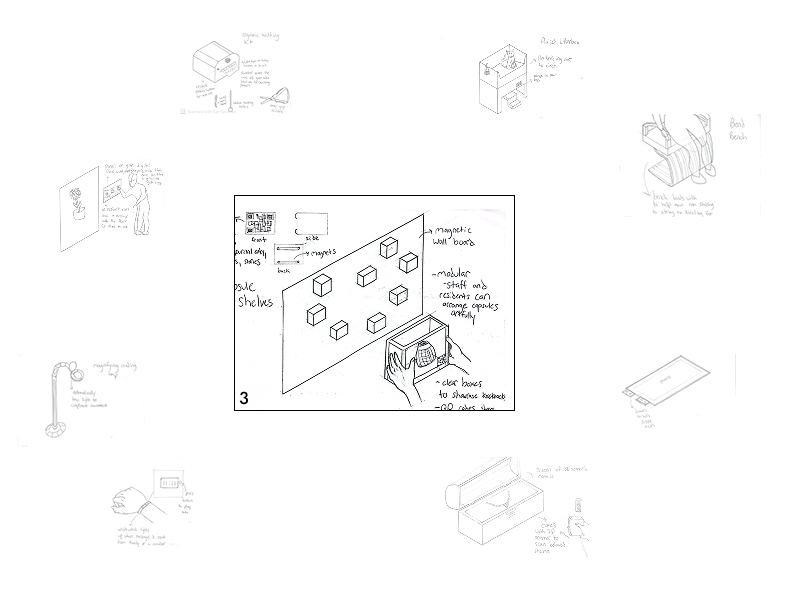
This cardboard artifact gallery was attached through magnets to show the residents the concept of agency over arranging their own displays.
Sketching to Further the Interactivity of the Design
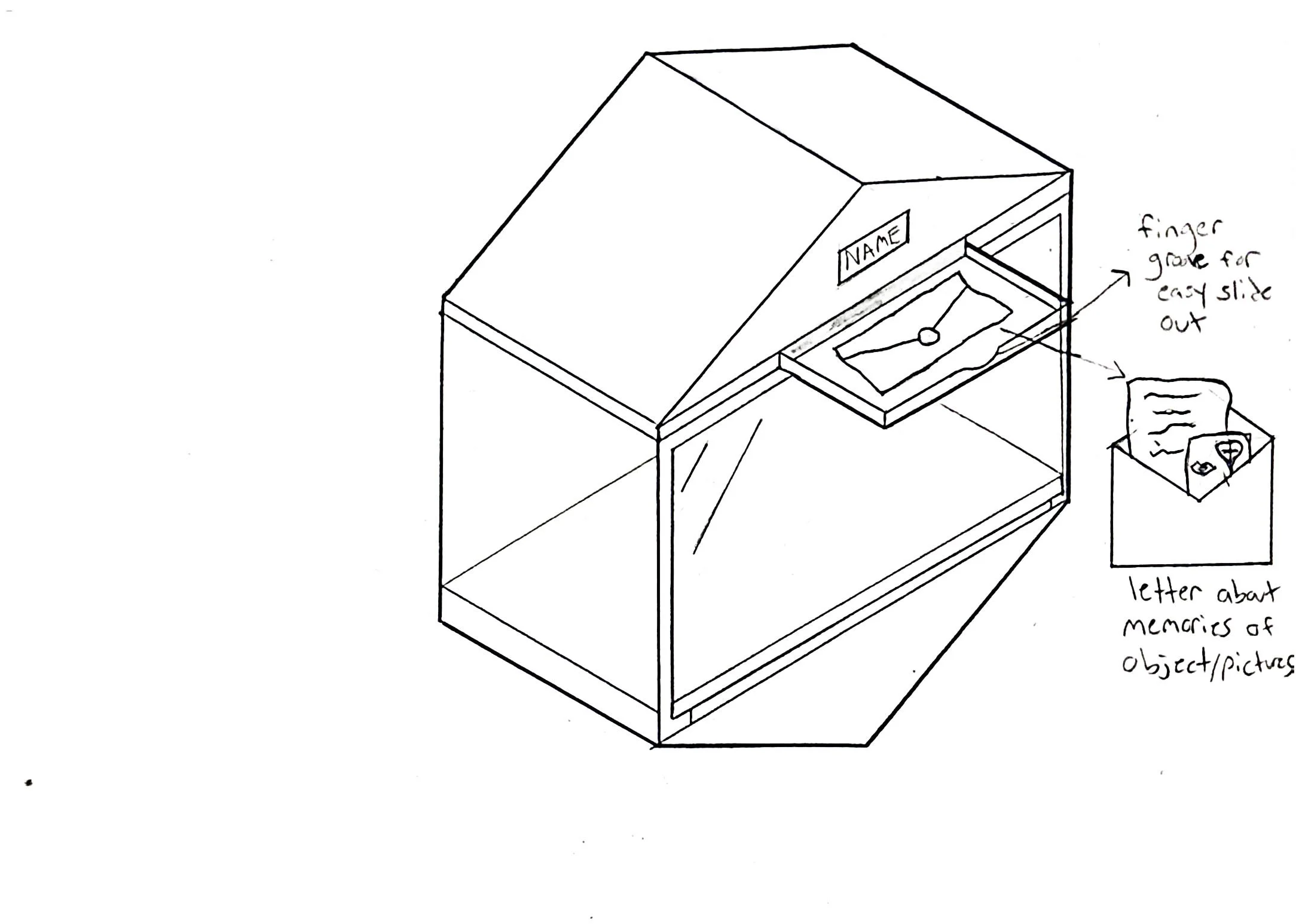
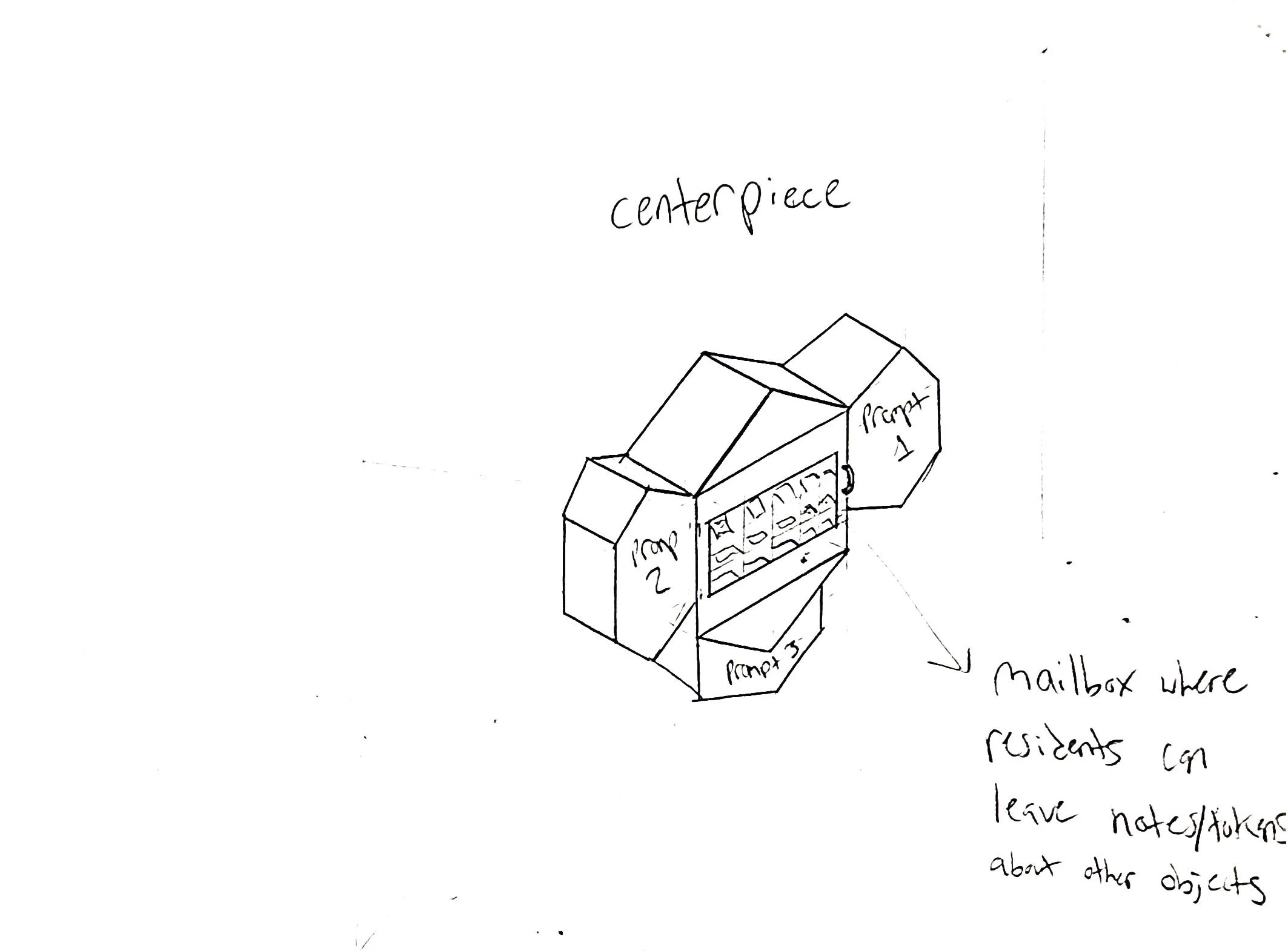
Prototype Development
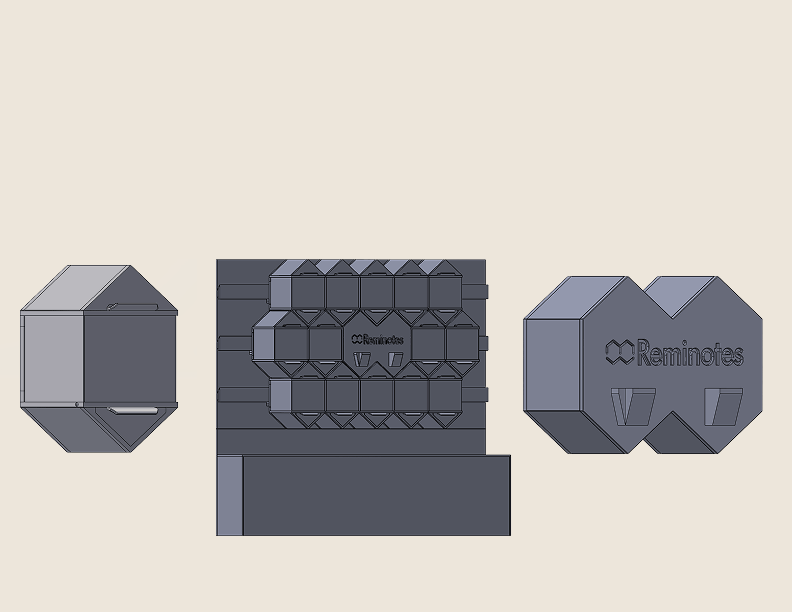
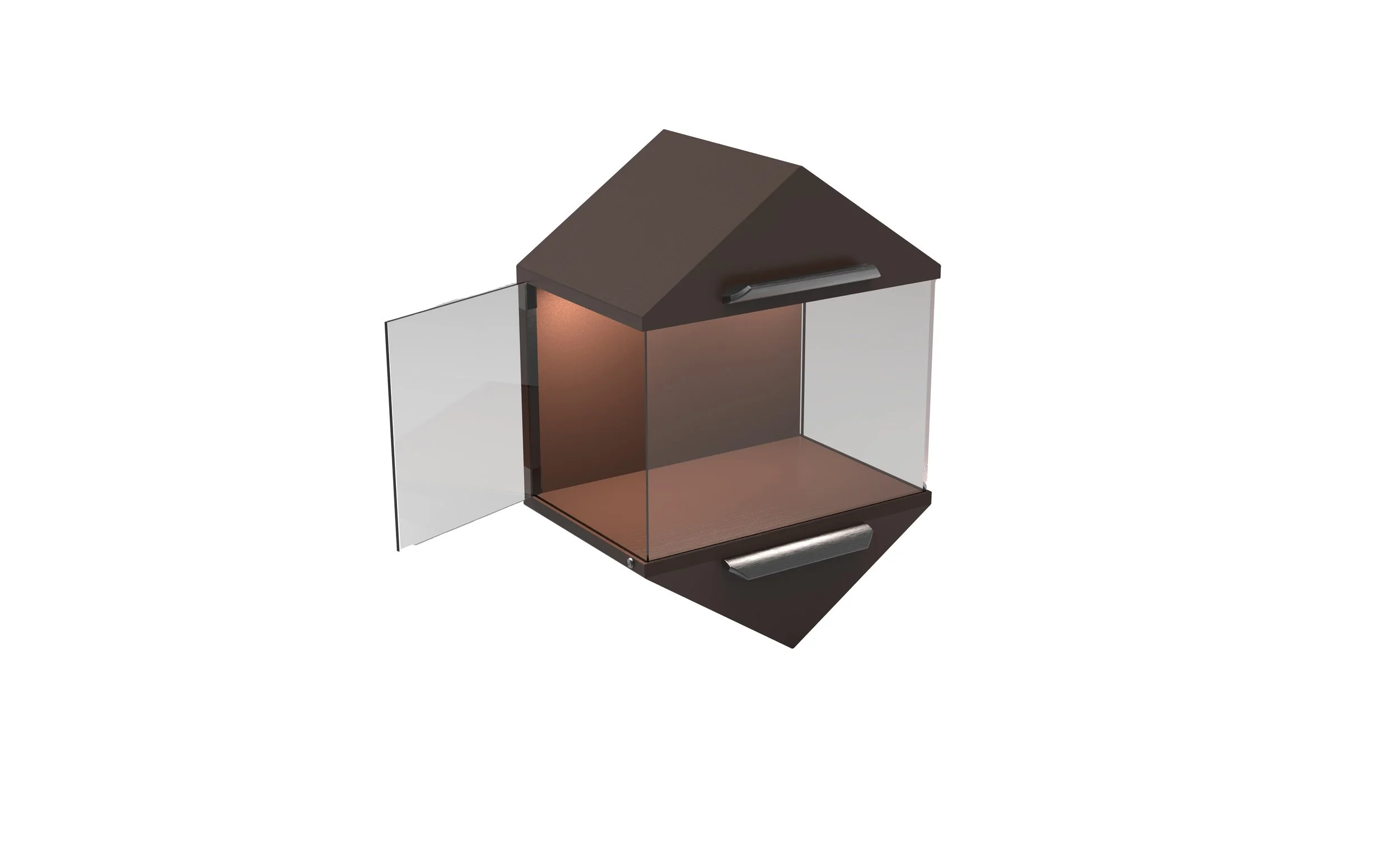
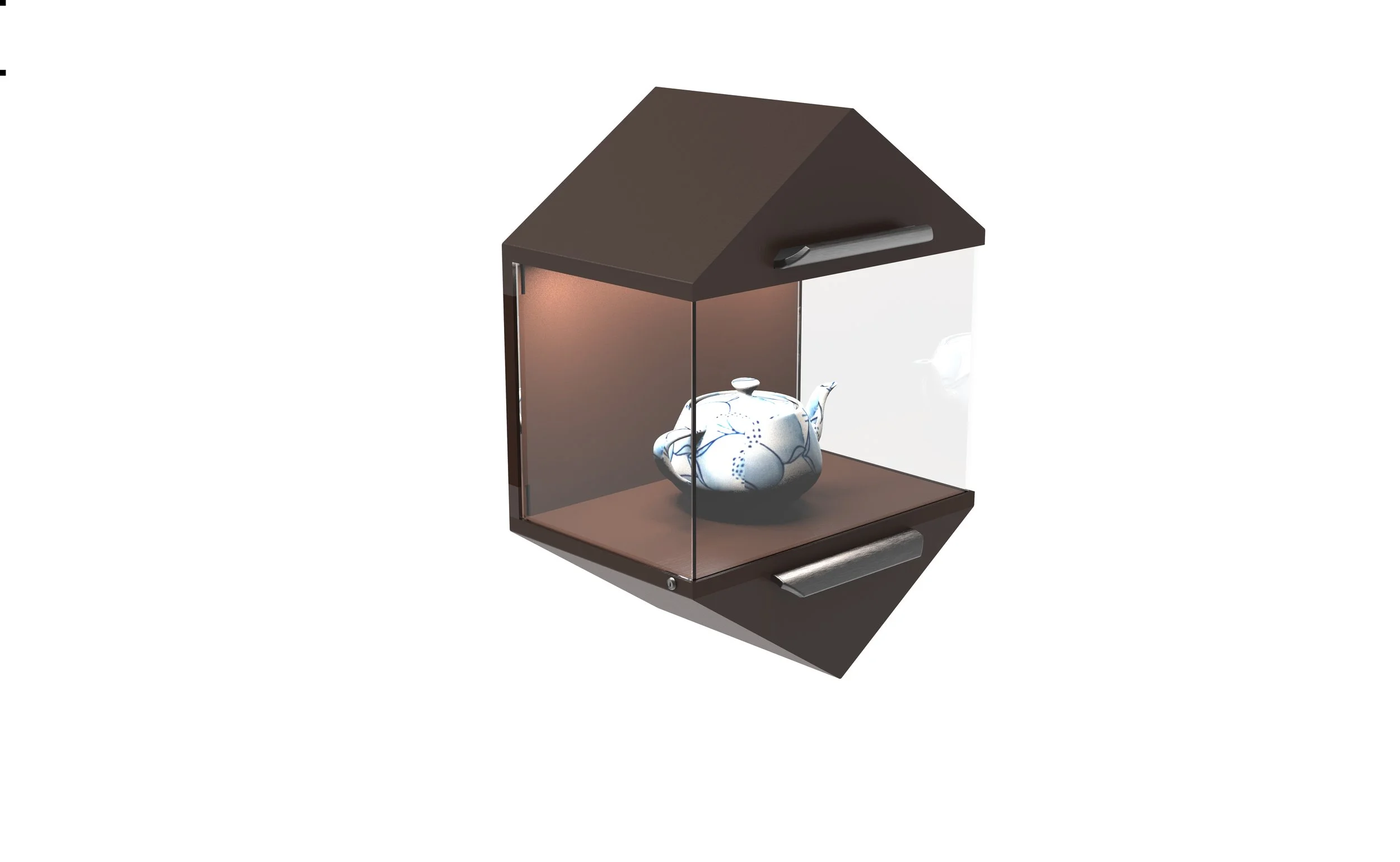
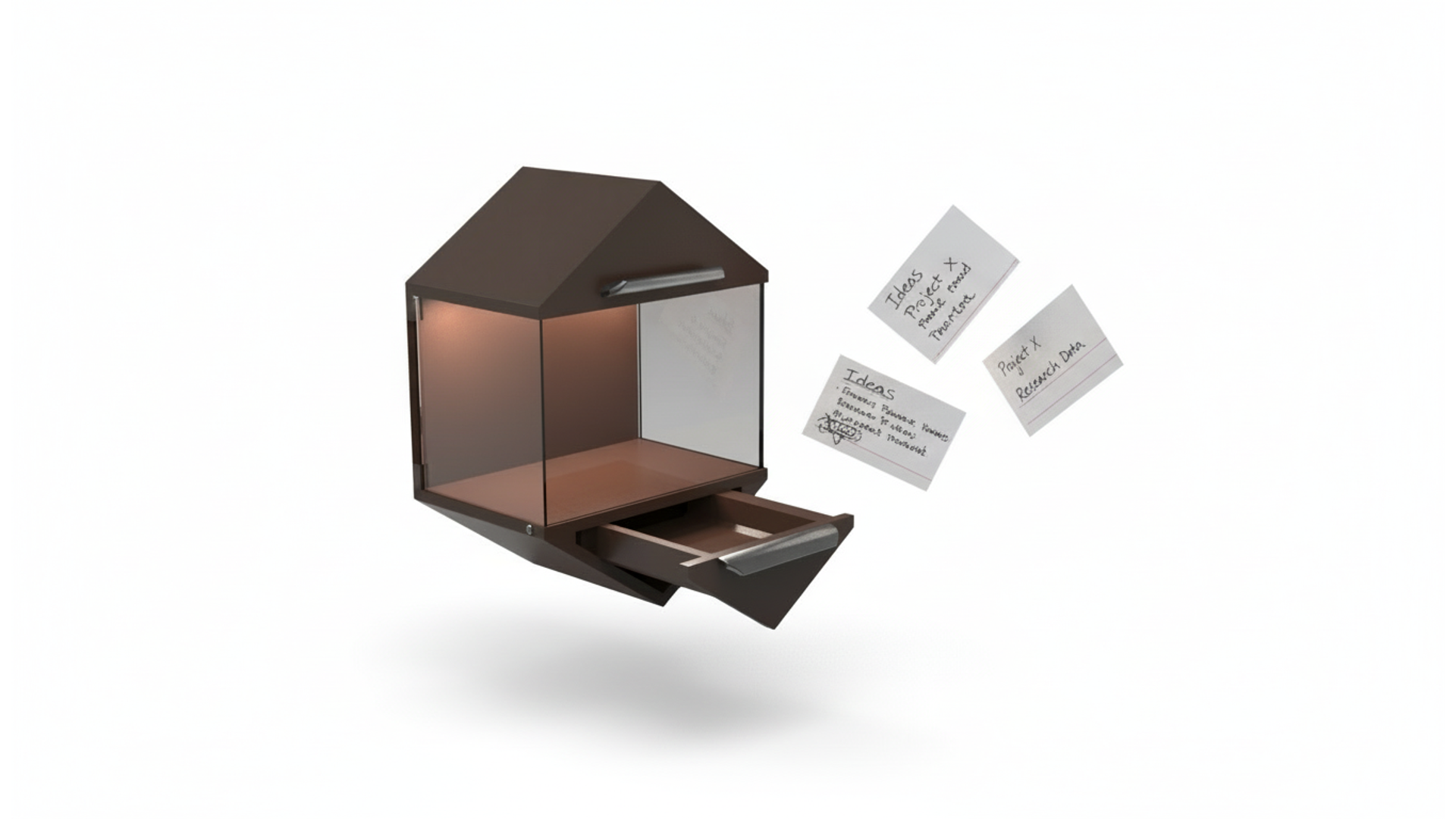
By modeling the memory capsules in 3D, we could explore form, proportion, and modularity while considering how older adults would interact with them physically and visually.
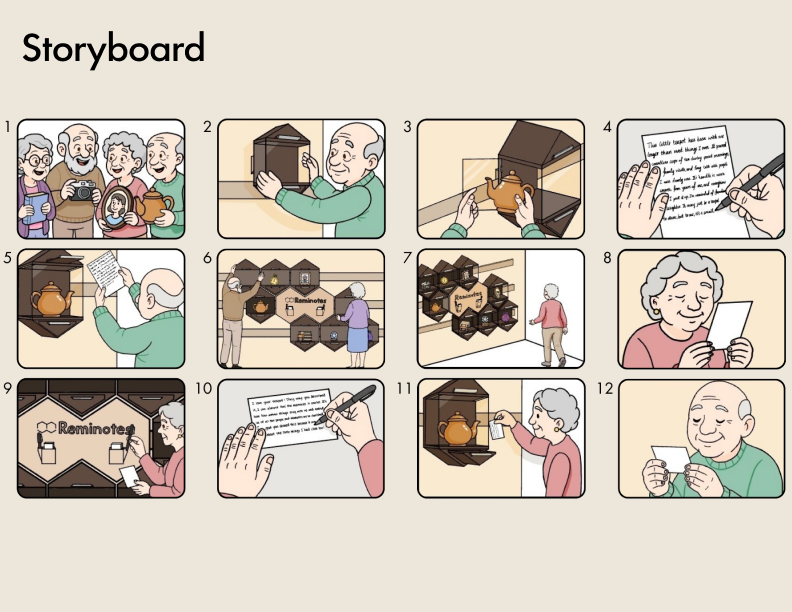
Drawn by Alivia Jiang

Centerpiece
To Create, Connect, and Inspire
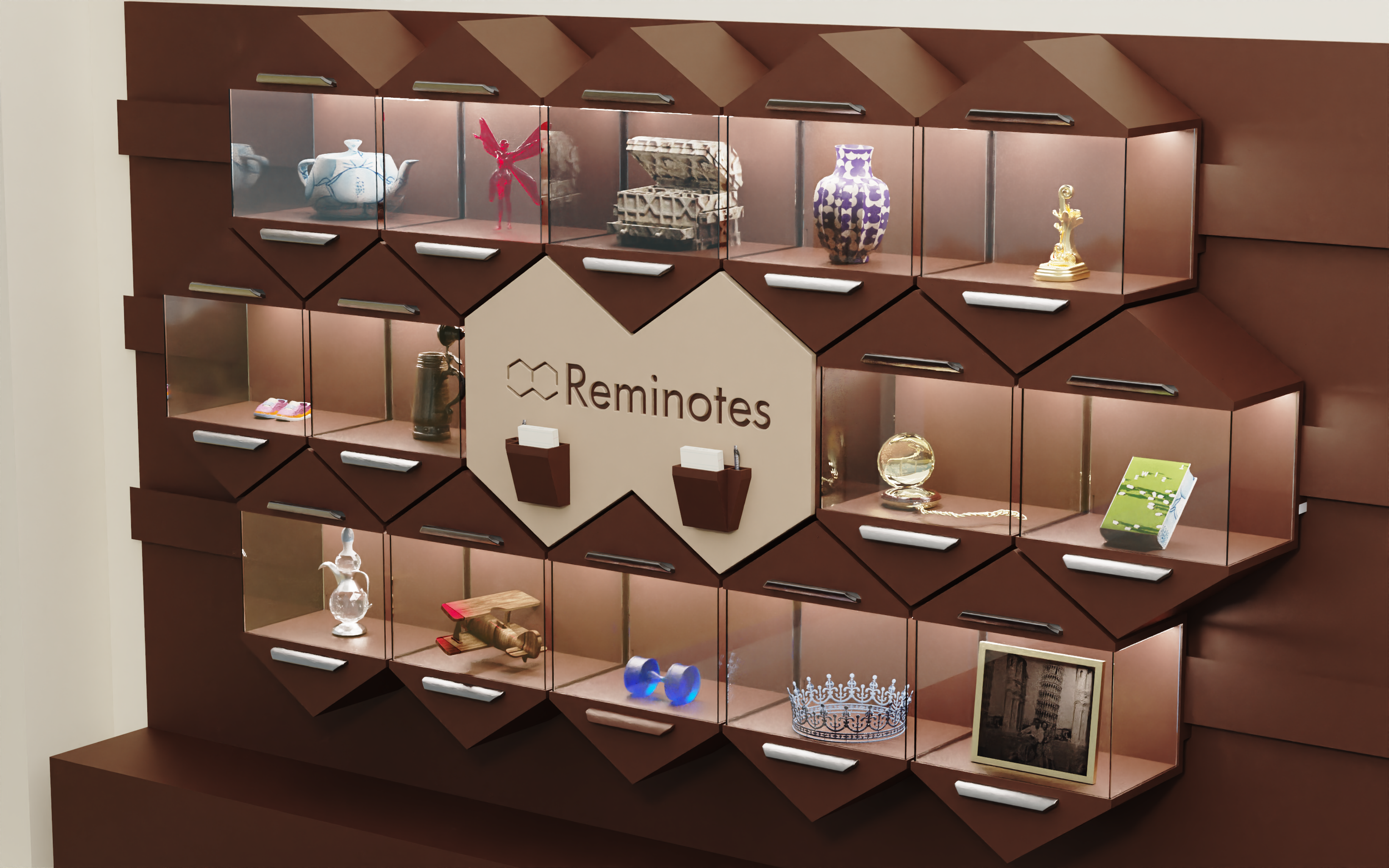
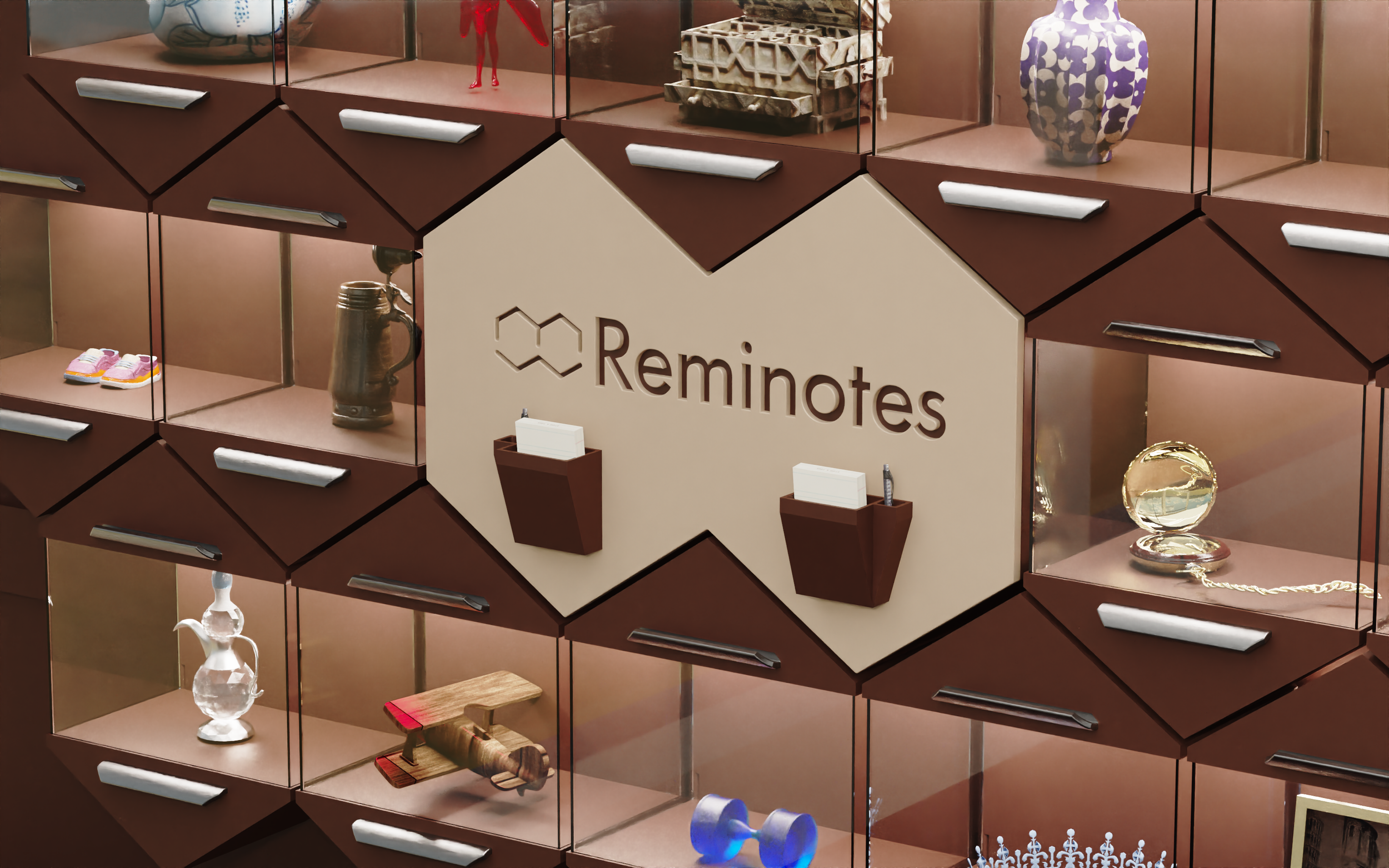
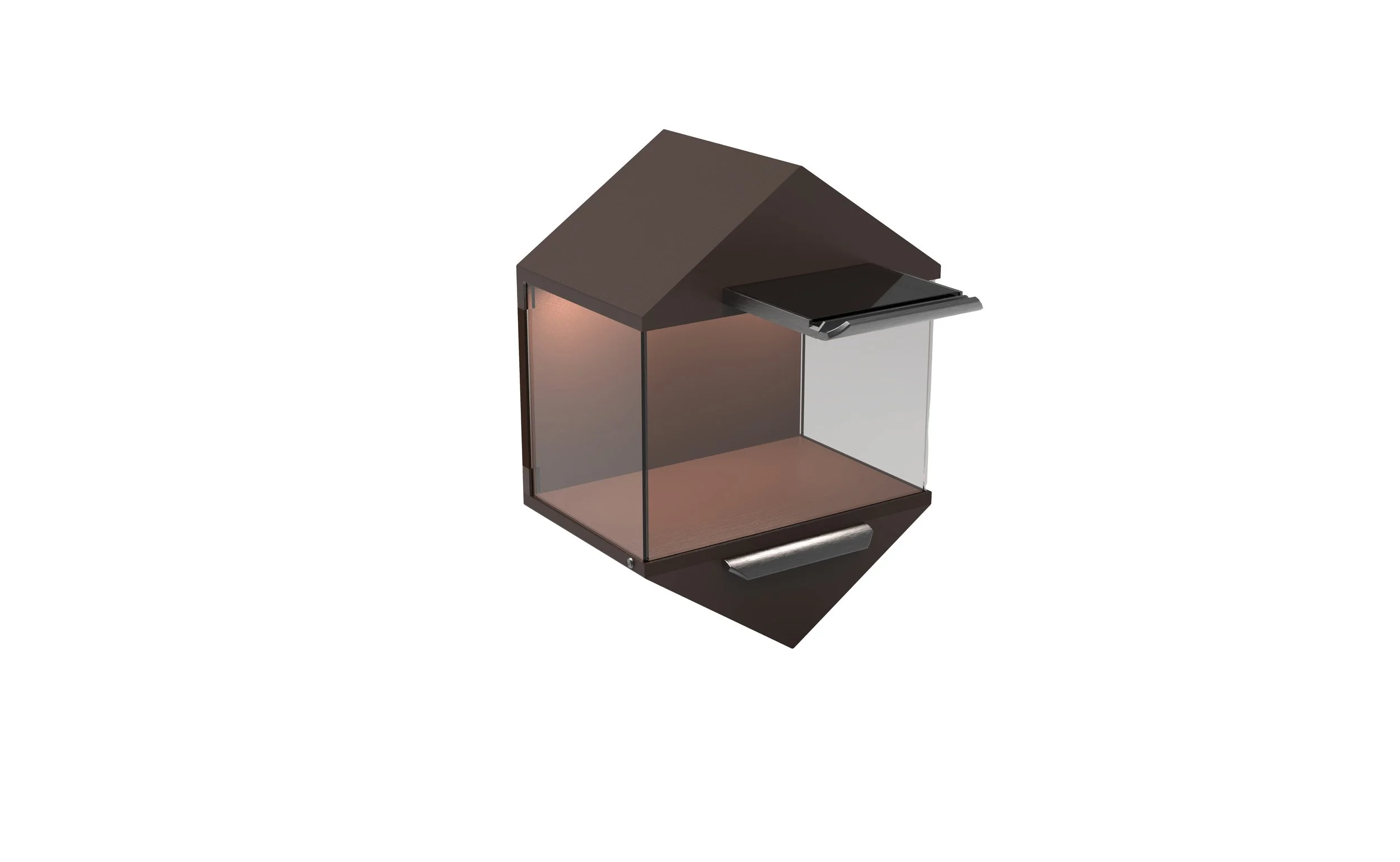
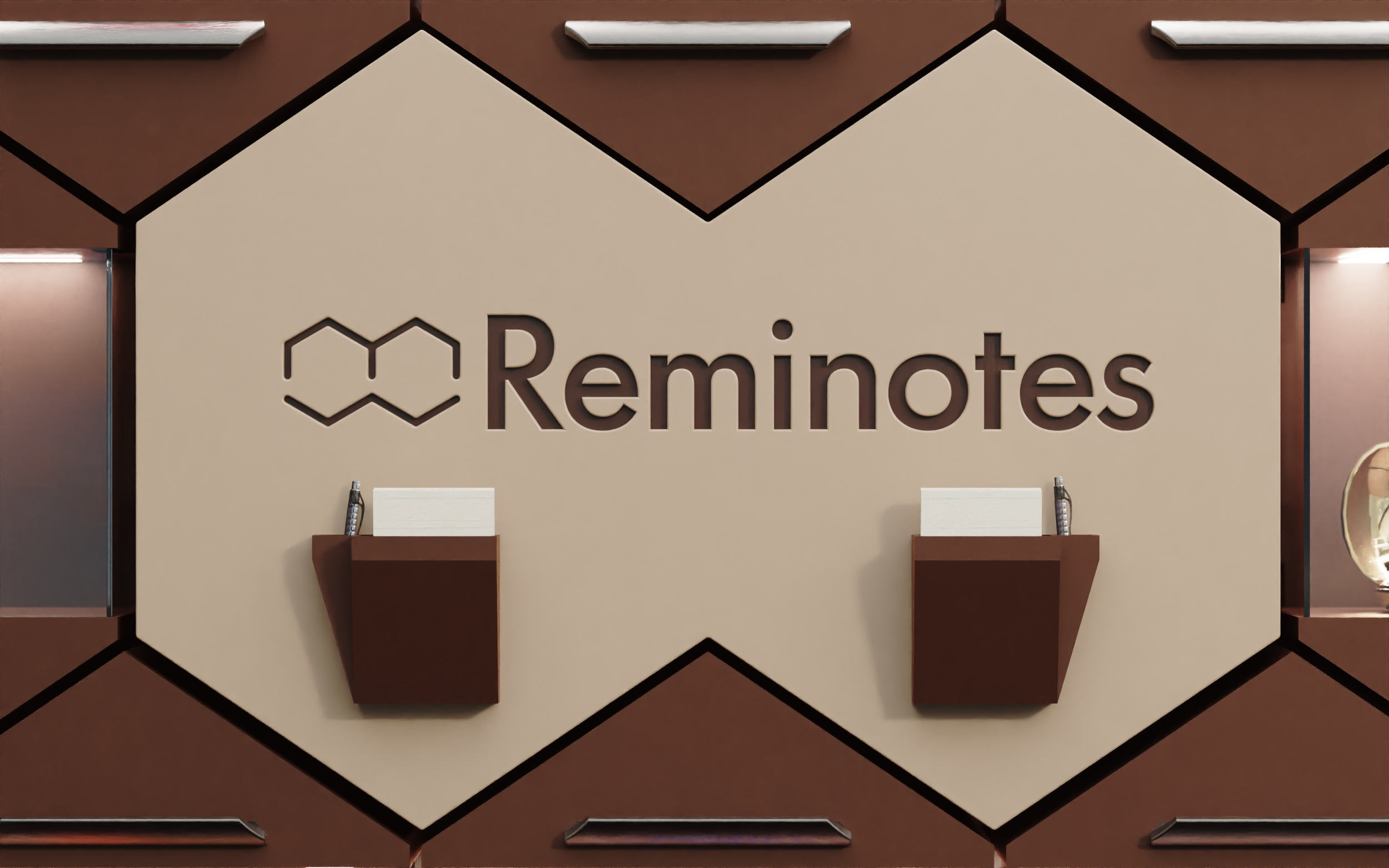
Acting as the focal point of interaction, the centerpiece provides note cards and pens that invite visitors to share messages and connect through the display.
Mix, Match, Make it Yours.
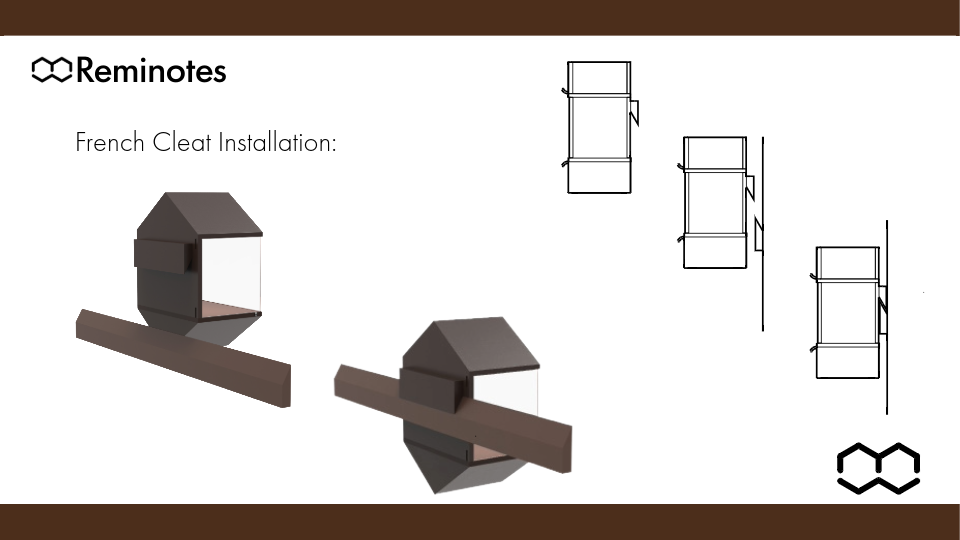
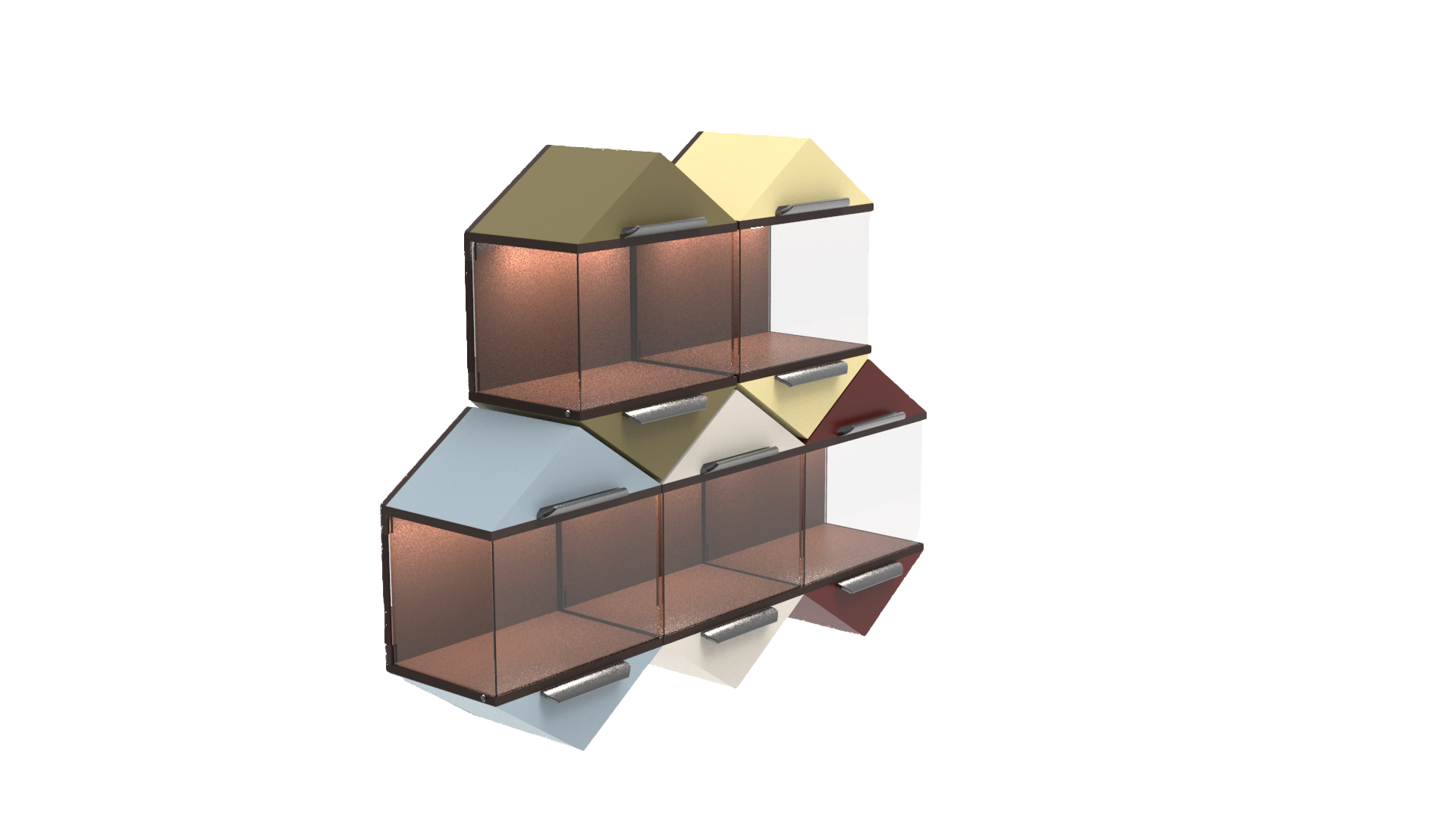
The modular aspect of Reminotes' french cleat produces the ability to rearrange, combine, and configure hexagons in a way that is both individual and significant to the community. This unique aspect allows for both aesthetic innovation and meaningful narrative construction.
Color Options
The custom colored hexagons allow for an opportunity for residents to create a visual signature that promotes self-expression. This constructs a mosaic of the community, inviting others to match up and mix with each other.
Flexible Arrangements, Forever Stories
Everyone has something they want to share.
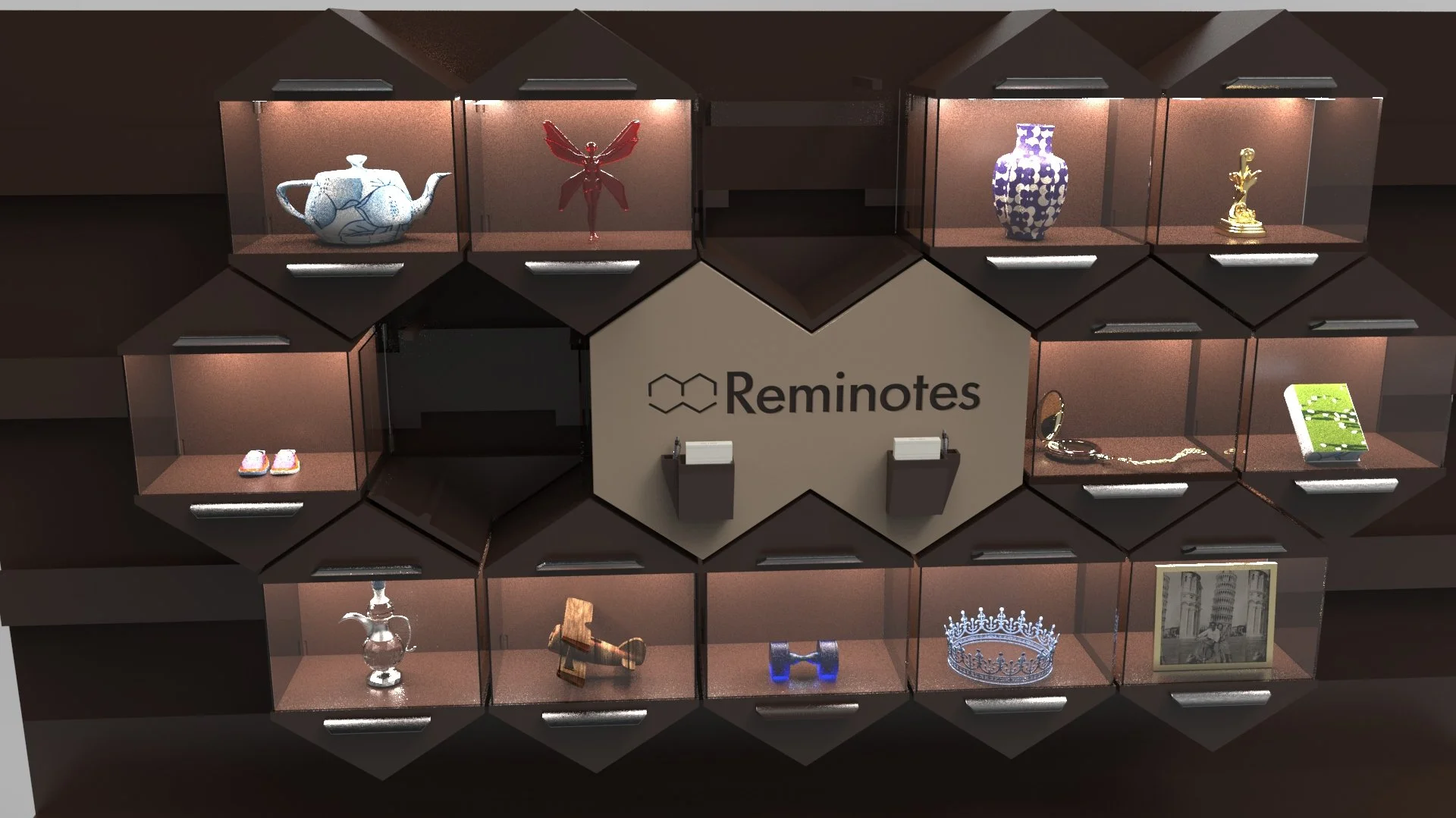
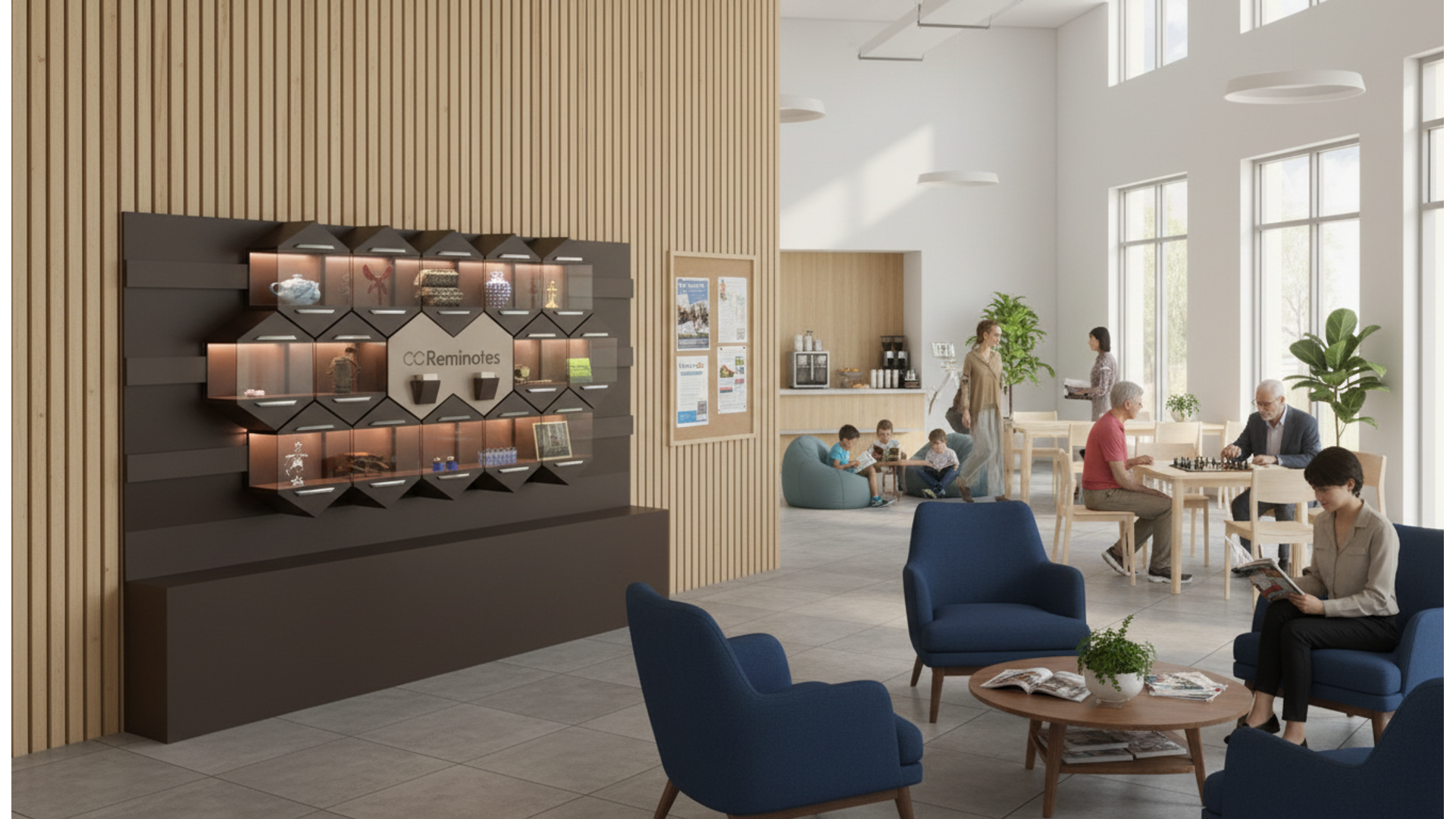
Reminotes’ sleek design can be easily integrated into a variety of communal spaces.


Everyone has Something Worth Sharing
This project explored how an interactive display can foster connection, self-expression, and conversation among seniors in residential care. Grounded in primary interviews, the design centers on residents’ personal possessions, inviting engagement through shared objects, written notes, and storytelling. The experience emphasizes movement through space, hands-on interaction, and emotional connection, reinforcing my interest in experience design that prioritizes human stories and meaningful interaction.